An AI data annotation pipeline converts raw, synchronized field recordings into quality-controlled training assets. Delovantage reviews capture quality and consent, processes the required modalities, aligns labels to source timestamps, performs human quality checks, and delivers the selected outputs in pipeline-ready formats.
Step 1: review capture quality and consent
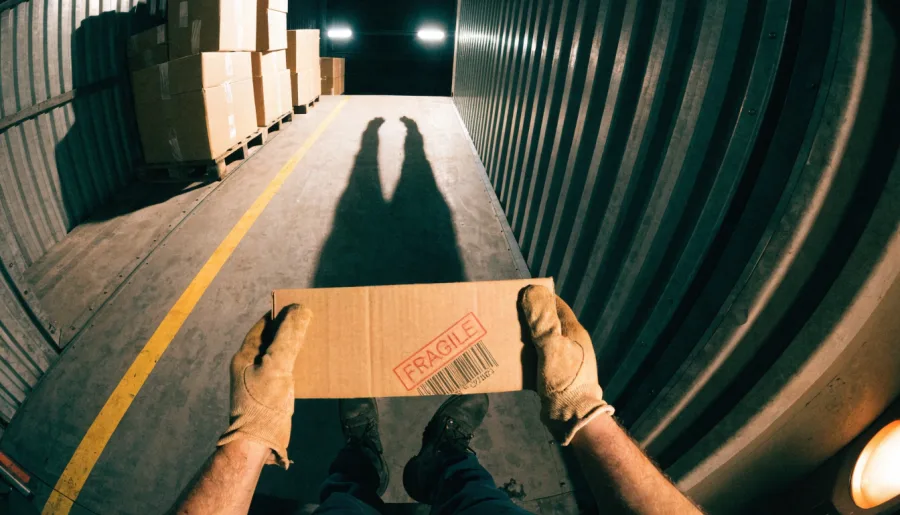
Raw footage arrives with synchronized sensor data such as IMU, depth, or LIDAR when the capture specification calls for it. A reviewer checks consent status, framing, technical quality, and whether the requested task was completed before the recording enters annotation.
Step 2: generate the requested annotations
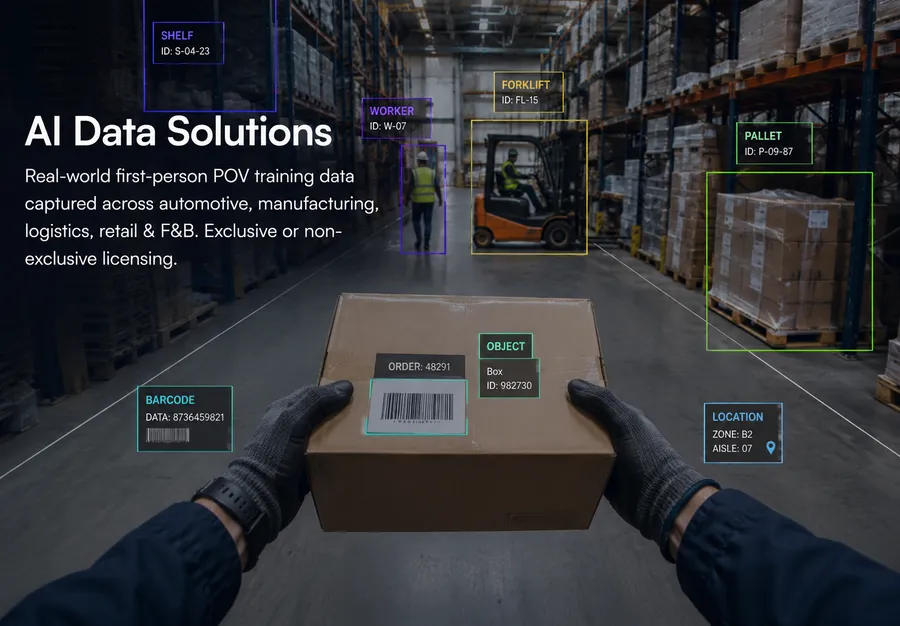
The selected workflow can produce 6-DoF pose, MANO hand mesh, object detections, action labels, semantic segmentation, scene graphs, optical flow, telemetry, and other outputs. The required modalities are defined by the license and model objective rather than added indiscriminately.
Step 3: align, quality-check, and deliver
Automated processing is followed by human quality checks. Outputs remain timestamp-aligned to the original footage so video, actions, pose, sensor signals, and labels can be joined reliably in the customer pipeline. Delovantage currently lists 21 available output formats, with custom delivery formats scoped on request.
Frequently asked questions
Which annotation formats are available?
The current catalog lists 21 formats, including video, depth, 6-DoF pose, MANO hand mesh, hand skeletons, point clouds, detections, action labels, body mesh, tactile data, ROS2 bags, telemetry, gaze, segmentation, optical flow, tracking, trajectories, and scene graphs.
How are annotations quality checked?
Capture quality is reviewed before processing, and automated annotation outputs receive human quality checks before delivery. The exact acceptance criteria are defined for each project and output modality.